Artificial Life Environment · open source

Explore worlds
of artificial life

A GPU-accelerated simulator where creatures made of particles sense, move, hunt and reproduce. Switch on mutations and watch evolution invent new forms on its own.

First prize · ALIFE 2024 Virtual Creatures Competition

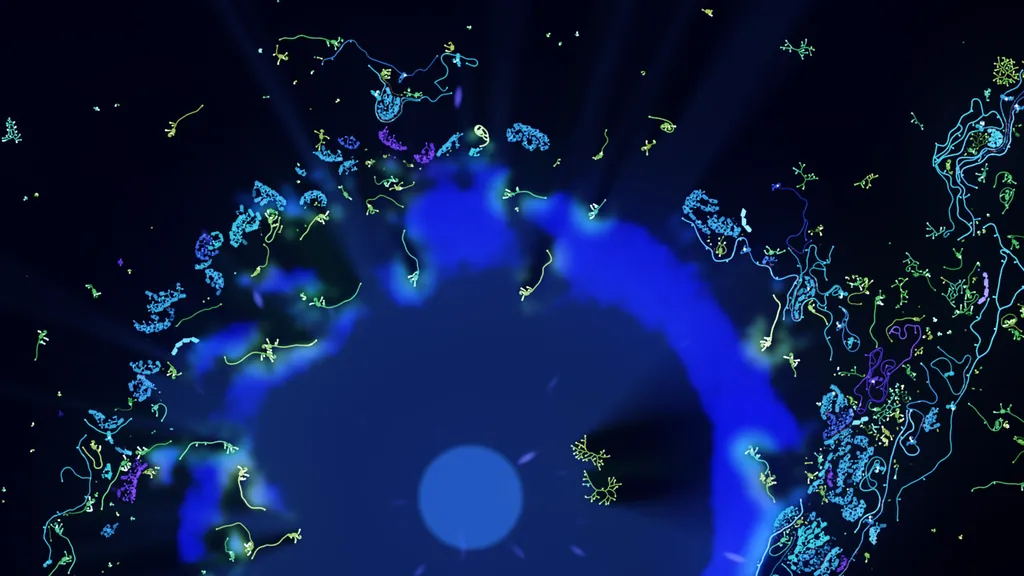
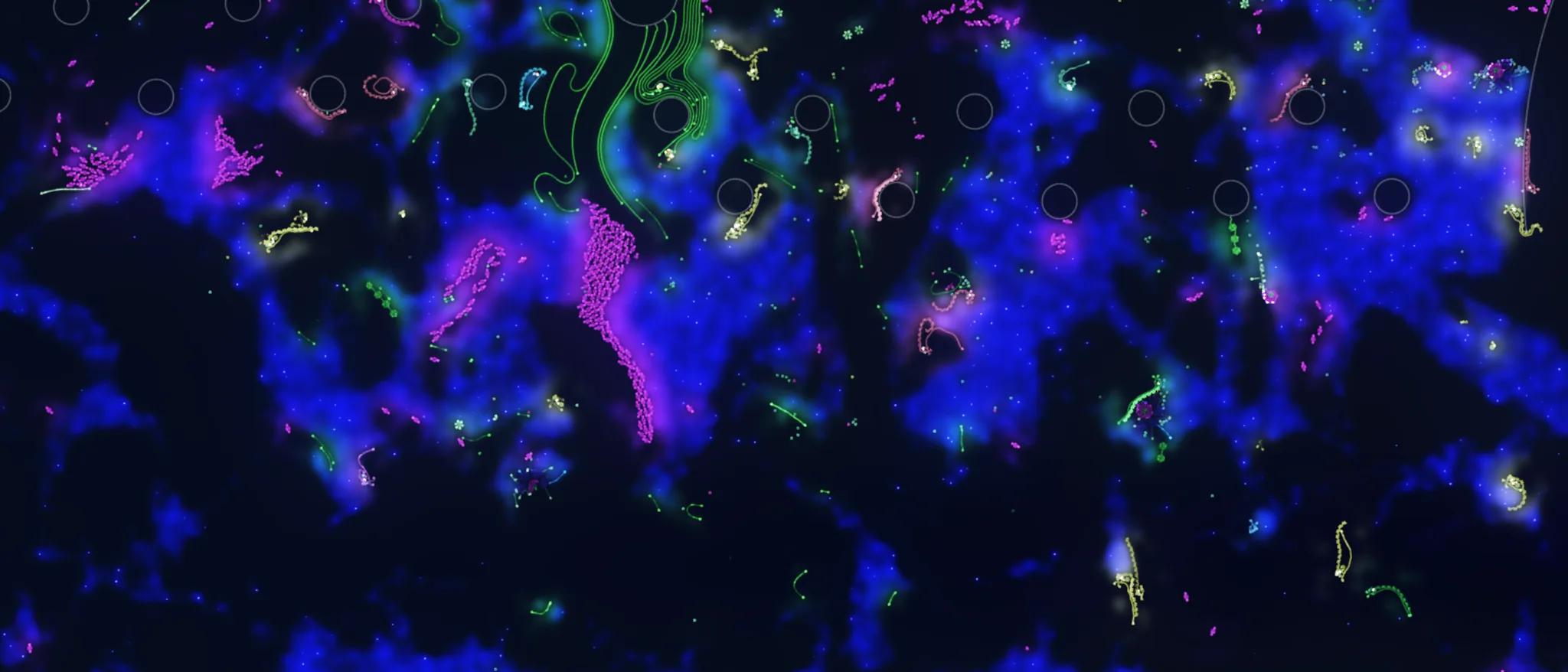
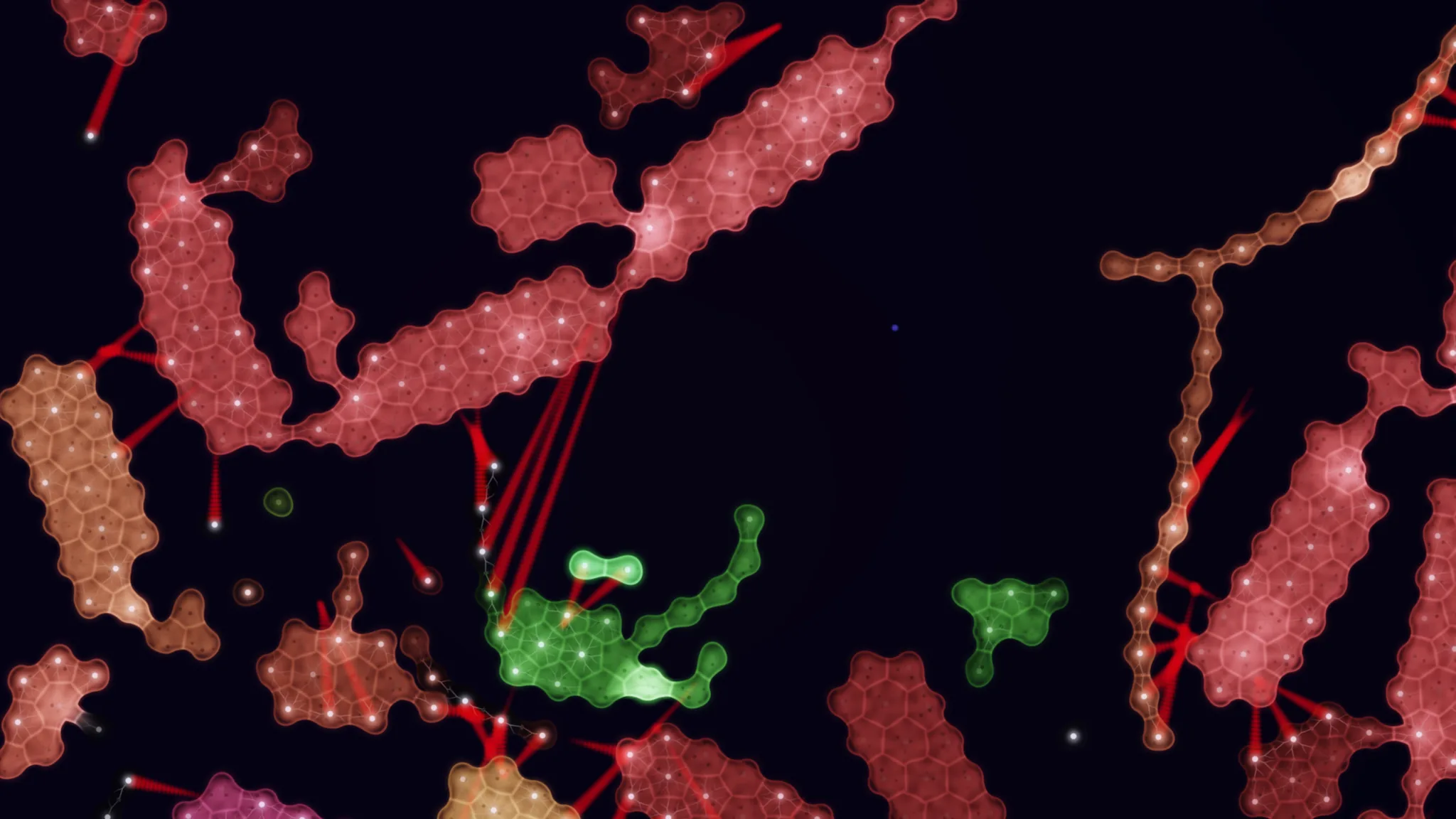
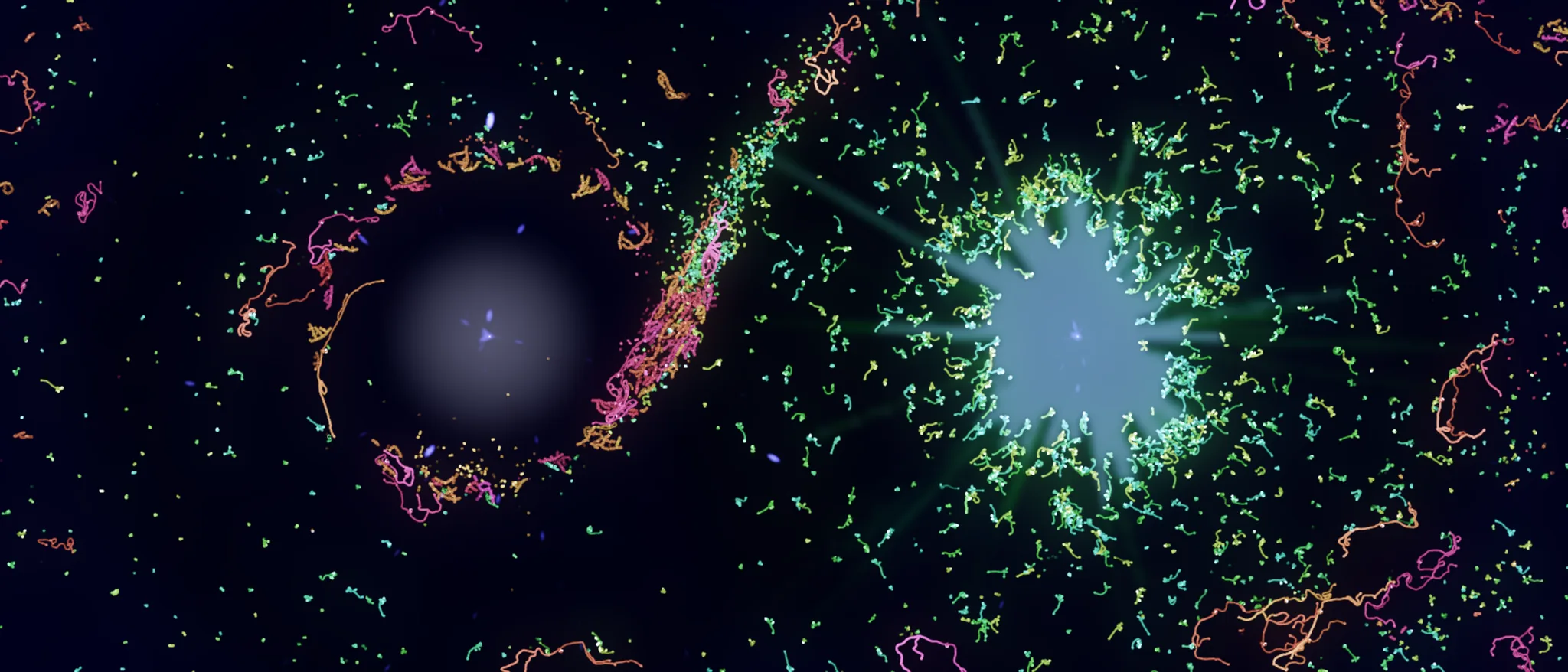
Live footage · microbes in the Hanging Garden · recorded in ALIEN 5

At a glance

Features

FluidsParticles without bonds flow like liquids and gases.
Star shaped and spiral creatures in the ray traced view
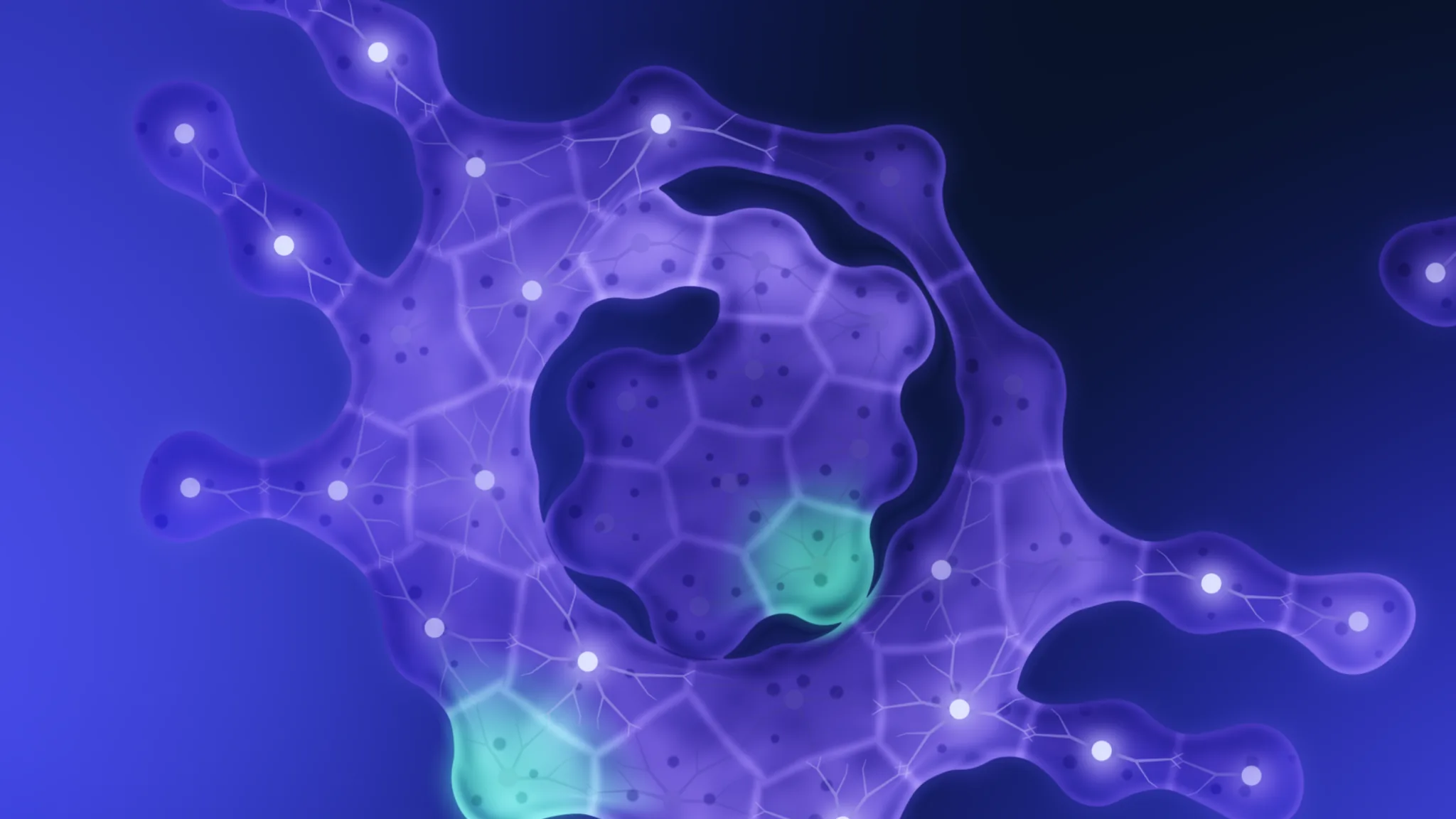
Soft bodiesCreatures are soft bodies made of particles and elastic bonds.
GPU Millions

of particles in real time. CUDA physics, Vulkan rendering, NVIDIA and AMD.

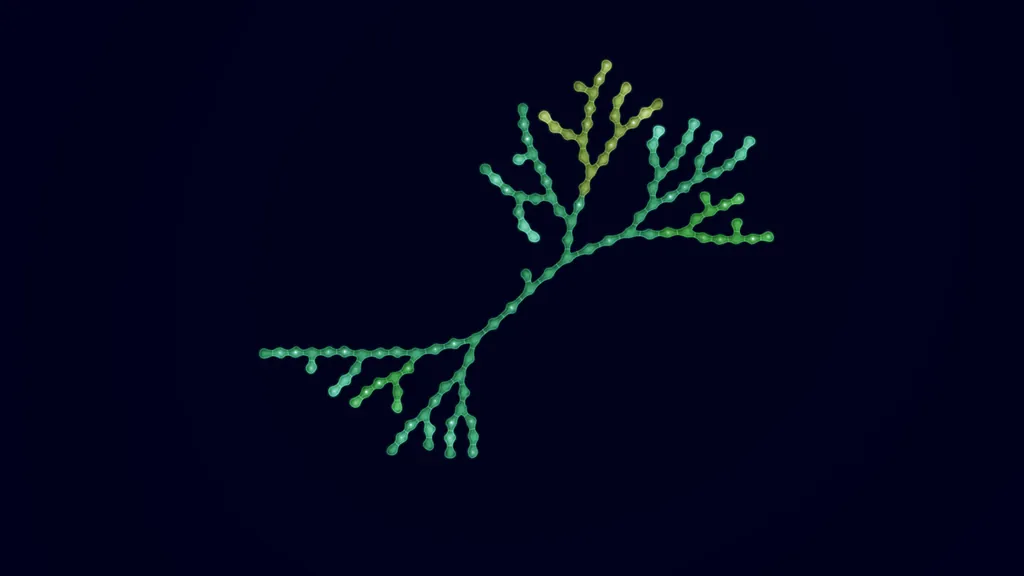
A branching green creature
EvolutionNo fitness function. This grazer evolved over 38 million time steps.
Light from the center of a vortex shining through glowing fluid and creatures
Hardware ray tracingShafts of light, shadows and glowing fluids in real time.
Cells A neural network in every cell

Together the networks form the nervous system of a creature. What each cell can do depends on its cell type:

  • sensor
  • muscle
  • attacker
  • injector
  • digestor
  • defender
  • depot
  • generator
  • memory
  • communicator
  • reconnector
  • detonator
  • base
  • void
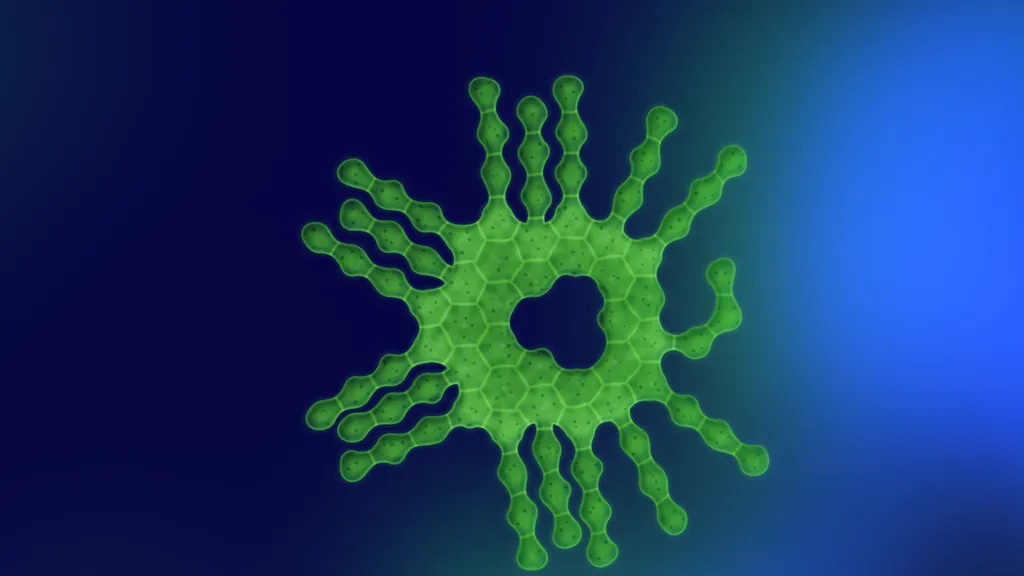
A star swimmer with many arms
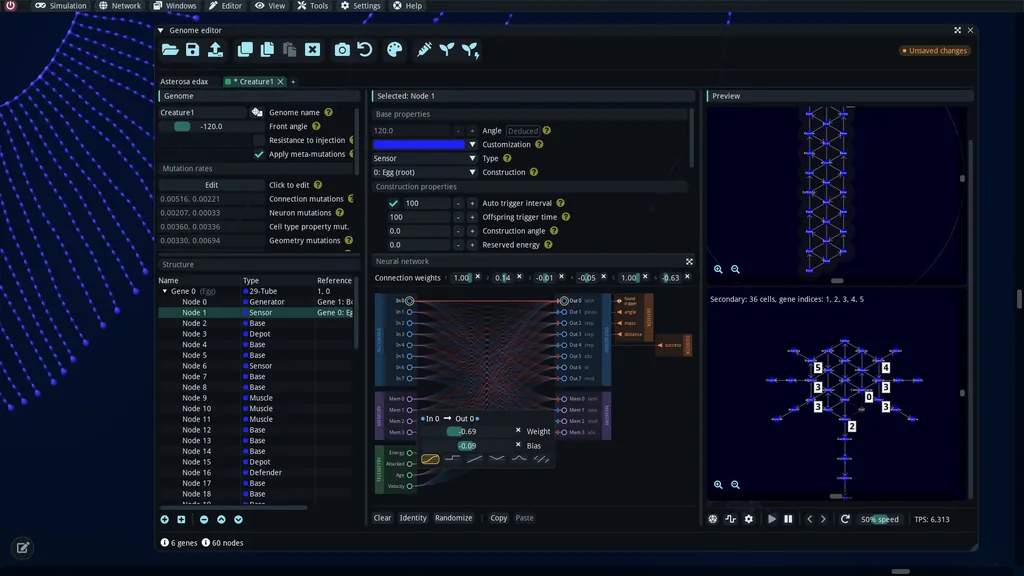
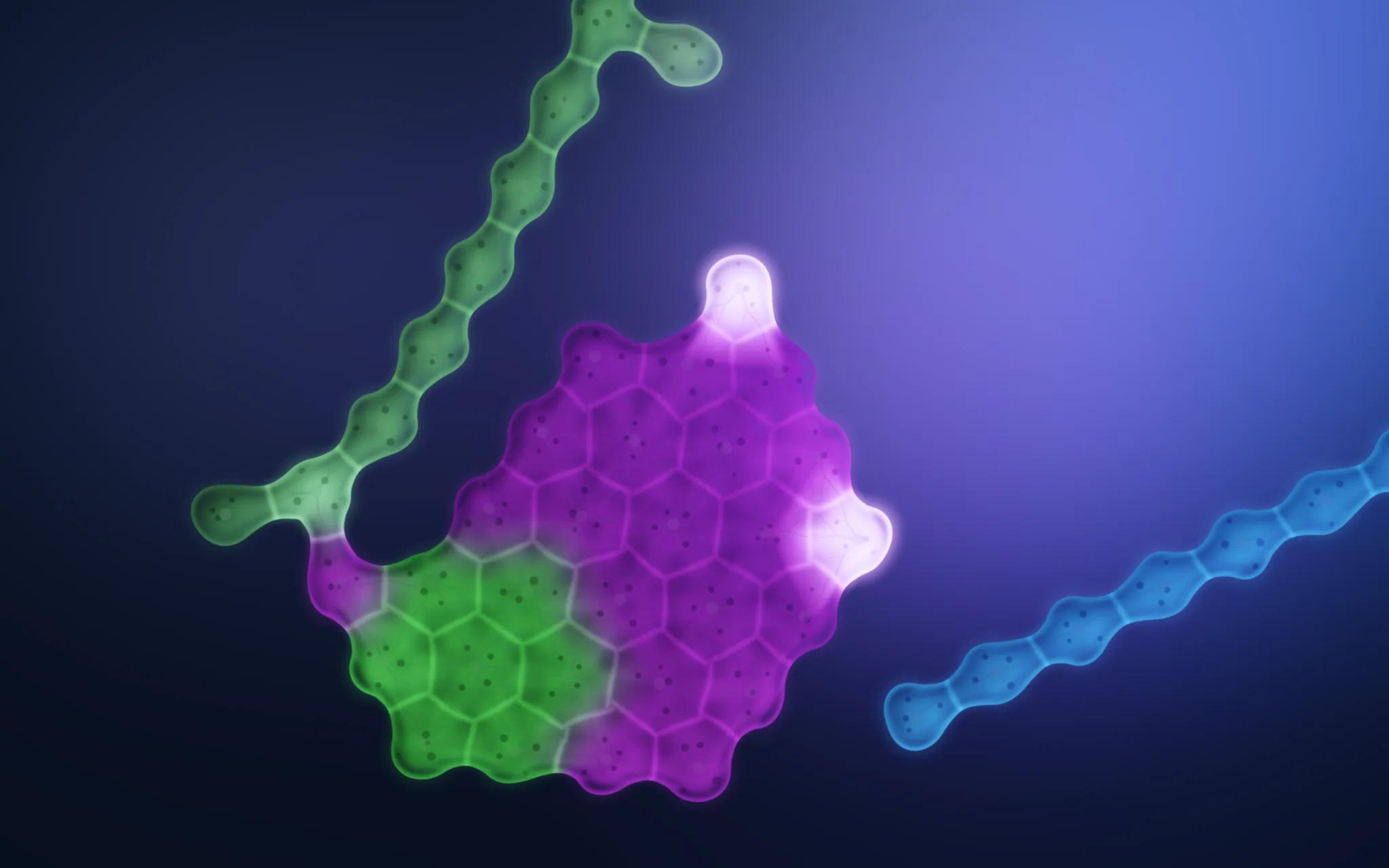
GenomeBodies grow cell by cell from genes.
The genome editor of ALIEN
ToolsGenome editor, drawing tools, evolution dashboard, autosave and a command line interface.

Download

Get ALIEN

Version 5 · built every night from the develop branch

NVIDIA GeForce RTX 20 series or newer (compute capability 7.5)
AMD RDNA2 or newer
Driver with Vulkan 1.3 support
Troubleshooting
  1. Use a supported graphics card and the latest graphics driver.
  2. The installation path, and on Windows the user name, should contain no non-English characters.
  3. ALIEN needs write access to its own directory.
  4. With several graphics cards, connect the primary monitor to the card that ALIEN uses. It computes and renders on the same card.
  5. On laptops with integrated graphics, assign alien.exe to the high performance GPU in the Windows graphics settings.
  6. Still stuck? Enable Settings › Debug mode, reproduce the error and open a GitHub issue with the log.txt attached. More in the chapter Troubleshooting.
Older versions

Version 4.12 for NVIDIA GPUs: alien-installer.msi

From particles to ecosystems

Vision

ALIEN aims to be a high-performance simulation platform for open questions of artificial life and is designed for open-ended evolution. At the same time, it is a playground for experimenting with digital worlds and exploring them without a specific goal.

01 · Matter

A physics engine for soft bodies and fluids

ALIEN explores life not only as we know it but as it could be, on a digital instead of a carbon basis. Everything consists of particles that bond into elastic solids, flow as liquids, stick, tear and break. Nothing is scripted: every behavior emerges from their interaction, computed on the graphics card for millions of particles in real time.

02 · Cells

Cells with functions and neural networks

Cells act as sensors, muscles, attackers, digestors, memory, communicators or constructors, and each one runs its own small neural network. Together they form the nervous system of a creature, which lets it control its movement, search for food and react to its surroundings.

03 · Creatures

Creatures built from genomes

A genome is a blueprint made of genes. Like DNA, it stores the information for building offspring: constructor cells read it and grow new creatures cell by cell. Replication from stored information, instead of copying the body itself, is what makes open-ended evolution possible. Design your own creatures in the genome editor, or let them emerge.

04 · Ecology

Energy flow and competition

Energy circulates between cells, free particles and an optional external pool. Creatures have to graze, hunt and defend themselves, and selection arises from limited energy, predation and competition for space. Arms races, symbiosis and the stability of whole ecosystems can be observed over millions of time steps.

05 · Evolution

Evolution without a fitness function

Mutations change neural networks, cell properties and the structure of genomes, and even the mutation rates can evolve. No external fitness function decides what survives. Lineages diverge and niches open without any further intervention. A long-term goal is to understand how complexity grows from simple building blocks, from prebiotic evolution to entire ecosystems.

AI agents · MCP

Controlling ALIEN with AI agents

Connect Claude Code or any other MCP client to the built-in server of ALIEN. The agent uses the same tools you have and checks its work with screenshots.

Set up an agent
1

Prompt

A description in plain language.

2

Tool calls

Executed by the MCP server of ALIEN.

    3

    Result

    A simulation to explore, edit and share.

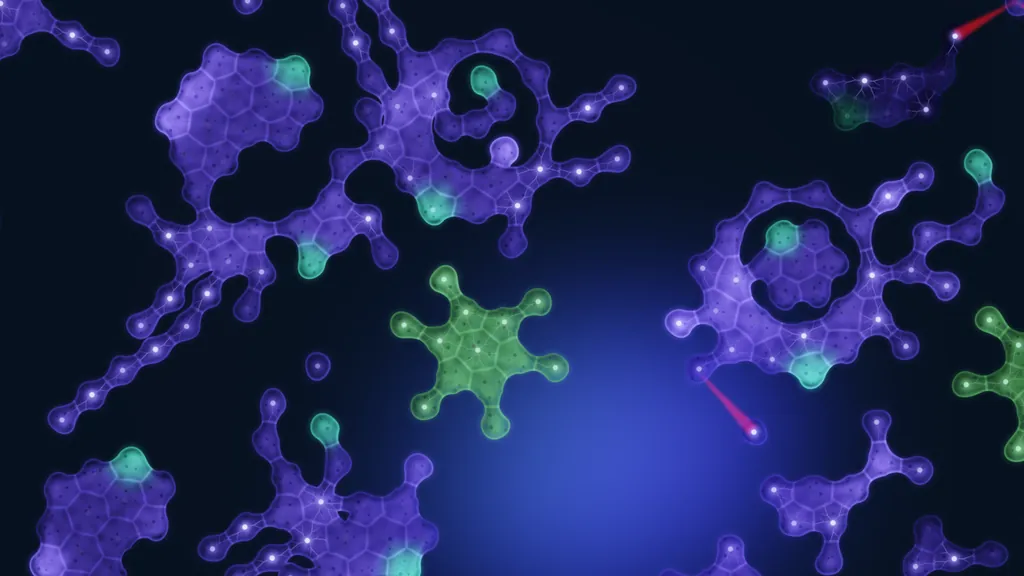
    All four results were made by an AI agent in ALIEN, starting from worlds of the built-in browser. The tool calls are shortened.

    Media

    Videos

    Winner of the ALIFE 2024 Virtual Creatures Competition. A world of identical, simple individuals gives rise to competing clades until niches and coexisting populations emerge.

    Development clips on X and BlueskyNew features of version 5 are shown first at @chrx_h on X and @chrxh.bsky.social on Bluesky.

    Video archive

    Earlier versions on YouTube

      All videos on YouTube →

      Documentation

      Guides and reference

      The same documentation as in the program: tutorials for the first steps and a complete reference of cell types, genomes, neural networks and simulation parameters.

      Community

      Channels and contributing

      Contribute

      Share simulations and genomes in the browser, report bugs, propose features or improve the documentation, which is plain Markdown in resources/docs. For larger changes please start a thread in the discussion forum first.

      Cite ALIEN


      About

      Background and history

      The beginnings of ALIEN were described in a paper in 2008. Since then it has grown over five major versions from a CPU simulation into a GPU engine with ray traced rendering.

      Initiated and mainly developed by Christian Heinemann, applied mathematician and software engineer, with the help of many contributors. Contact: info@alien-project.org